What a Noblewoman Actually Did All Day in 1455

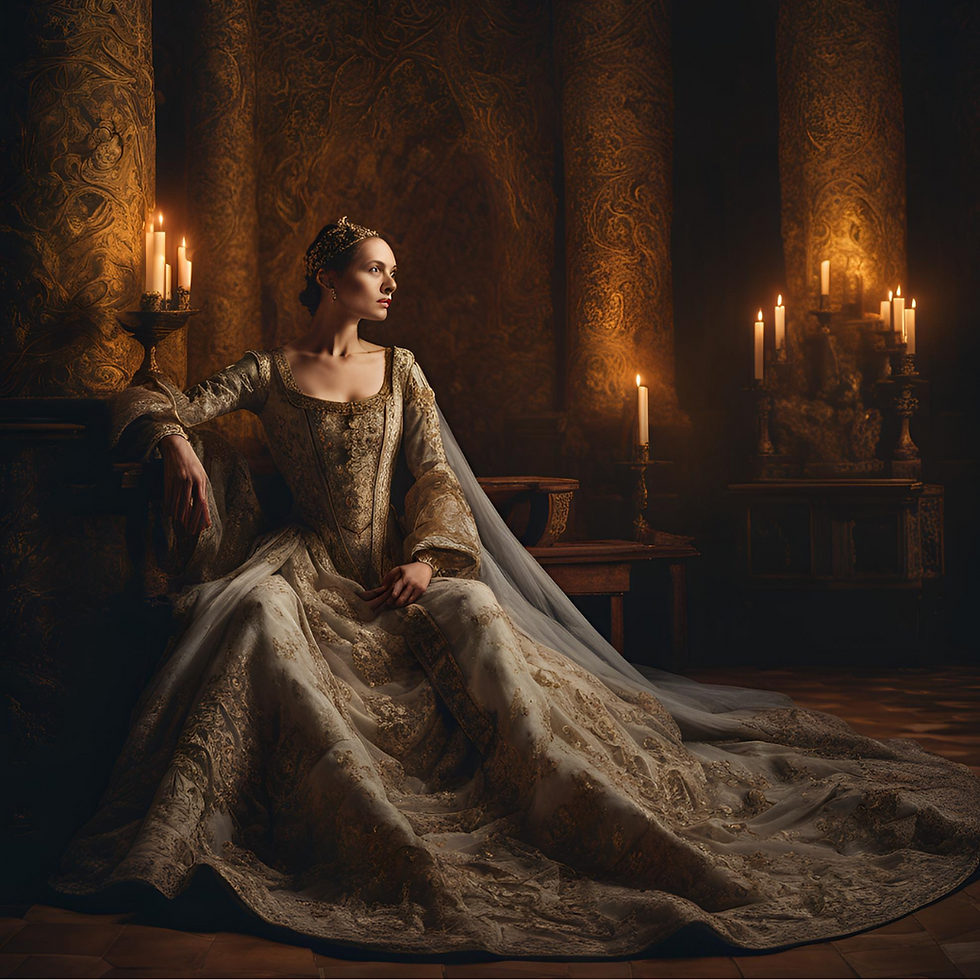
There is a kind of historical novel where the noblewoman lies on a chaise longue eating sweetmeats while her servants do the work of running the household around her. I have read several. They are not particularly accurate.
A noblewoman of rank in the 1450s ran what we would now call a small organisation. Her household might include between forty and over a hundred people, depending on her station and whether her husband was at home or at court. She was responsible for feeding them, clothing them, paying them, settling their disputes, and ensuring that the place did not fall to pieces during the months her husband was away on the king's business or his own. There was always a husband away on somebody's business in 1455.
Her day began before dawn. Mass was usually first, in the household chapel if there was one, or the parish church if not. Religious observance in this period was not a private matter. It was a public daily routine, performed in front of one's household, and it set the tone for everything that followed.
After Mass came the household accounts. Receipts, expenditures, deliveries from the home farm, payments to suppliers, wages, the cost of the chandler and the brewer and the spice merchant. Most noblewomen of any standing could read and write at least functionally, and many were highly literate. The idea that medieval women were universally illiterate is a Victorian invention. The Pastons, Stonors, and Celys all left correspondence in which the women run circles around the men in matters of estate management and legal strategy.
After accounts came correspondence. A noblewoman in 1455 might write or dictate several letters a day. To her husband, to her steward, to her cousin in another household, to her chaplain, to the wife of her husband's enemy. Letters were the connective tissue of the period. Information moved at the speed of a horse, which is to say slowly, and the women who controlled the letters often controlled what their husbands knew and what they did not.
Then came the household itself. The kitchens to be inspected. The brewhouse and the bakehouse. The dairy. The stillroom where medicines and preserves were made. The garden, if she had one, which by 1455 most great houses did. The chambers to be aired. Linens to be checked. The servants who needed instructions for the day, the week, the season. A noblewoman did not do this work with her hands, mostly, but she supervised every part of it, and she was expected to know how each task should be done.
There was usually some form of needlework or weaving at some point in the day, but this was not the decorative pastime later centuries imagined. Vestments for the chapel. Altar cloths. Coverings for the great hall. Items of clothing for the household. The work was both useful and devotional, and the most skilled women of the period produced ecclesiastical embroidery that still survives in cathedrals across Europe.
She would also have had visitors. Cousins, allies, petitioners, traders, men sent by her husband's friends or enemies. The hospitality of a great household was both a duty and a strategy. Who you fed and slept under your roof was a political statement. Refusing to receive someone could be the start of a feud.
If there were children, and there usually were, she supervised their education. Sons were sent away to other households around seven or eight, to be raised in another lord's hall. Daughters often stayed longer, learning what they would need to run their own households when the time came. The teaching was practical and intensive. By twelve or thirteen, a girl was expected to be ready, in theory, for marriage.
Evening brought the formal meal in the great hall, the second observance of religion, then the gradual closing down of the day. Candles were expensive. Most households were dark by an hour or two after sunset, and people went to bed early because they had to be up before dawn again.
This is the texture of life I wanted in The Kingmaker's Spy. Not the romance of the period for its own sake, but the rhythm of it. The hours and the work and the small daily decisions that built into something larger. Alice moves through this world because she was raised in it. By the time she is twenty-three, she has been running households in some form for half her life. The skills are second nature. Which is, of course, the whole point.
A spy in 1455 was somebody who could move through a household without anybody asking what she was doing there. A noblewoman, performing the work she had been trained for since childhood, was already invisible. The trick was understanding what to do with that invisibility. Alice understood early.
Blood of the Bear- Book 2 is on pre-order here


Comments